Drywall and wall-cavity drying
Drywall dries faster than most materials, but insulation in a cavity can hold water long after the surface looks dry. Directed airflow through small openings often saves walls that would otherwise be cut out.
Air movers, dehumidifiers and daily moisture readings that dry Lewisville walls, floors and cabinets to a written goal.
Fastest: call (833) 490-5225. Or send this and we call you back.
Structural drying removes moisture from walls, floors, framing and insulation with air movers, dehumidifiers and daily meter readings, until each wet material matches a dry reference from your own home. In sealed, air-conditioned slab houses, open windows are not enough. The phone is never left unanswered, and a crew goes out once one is free.

A wet house that looks dry is the problem structural drying solves. After the water is extracted, moisture stays in drywall paper, wood framing, insulation and the base of cabinets, and only moving, dry air can bring it out. The work is measured, not guessed.
That is harder in North Texas than people expect. Homes here are tightly sealed and air conditioned for months, summers are hot and humid, and the air inside a closed house can already be carrying moisture. Throwing the windows open can add to the load instead of reducing it.
This page explains what the equipment does, how readings decide when the job ends, and why repairs wait. If you want the sequence from first call to finished repair, the water damage restoration page gives it.
In a hot, humid climate, outside air can carry more moisture than the damp materials inside, so opening windows can slow drying or reverse it. Fans move air across wet surfaces but do not remove moisture from the room. A dehumidifier does that, and meters confirm whether materials are actually drying.
Drying works when the air is drier than the material. Cool, air-conditioned indoor air is often the better starting point, and a closed house with a dehumidifier gives the crew control over the conditions. Windows on a muggy North Texas day undo that control.
That is not an argument against airing out a small spill. It is a reason to stop guessing once water has gotten into a wall or under a floor.
A typical wet room takes three to five days, and a larger or deeper loss takes longer. The finish line is not a number of days but a reading: wet materials must match the dry reference. Concrete, hardwood and thick insulation are the slowest to give up moisture.
Drying follows a curve. The first day removes the most water, and the last days remove the stubborn moisture deep in dense materials. That is why the readings in the final visits matter more than the look of the room.
If the readings stall, the crew changes something: more airflow in a cavity, a bigger dehumidifier, or the removal of a material that cannot dry. A job that stalls and is simply left to run is a job that is being billed without a plan.
Readings show how wet a material is compared with a dry reference in the same house. Pin meters read wood and drywall, pinless meters scan surfaces, and a thermal camera shows cool, wet areas that the eye cannot see. Together they decide where to put equipment and when to stop.
Each visit adds a row to the log: date, location, material and reading. When you see those rows falling toward the reference, drying is working. When you see them stall, it is time to change the plan.
You receive that log and the photographs at the end. They are the record your insurer or a later buyer may want, and they show the house was dried and not merely repaired over.
Rarely, and only when meters confirm the materials are already dry. Closing a wall over damp framing traps moisture against wood, and that is how a one-time leak becomes a mold problem months later. Drying first costs days and often saves a second repair.
Painting over a stain does not dry the wall behind it. Neither does new flooring over a damp slab, which can fail or grow mold under the planks. If a contractor wants to rebuild before any readings are taken, ask for them.
If mold is already visible, the mold remediation page explains how Texas handles that work, which is separate from drying.
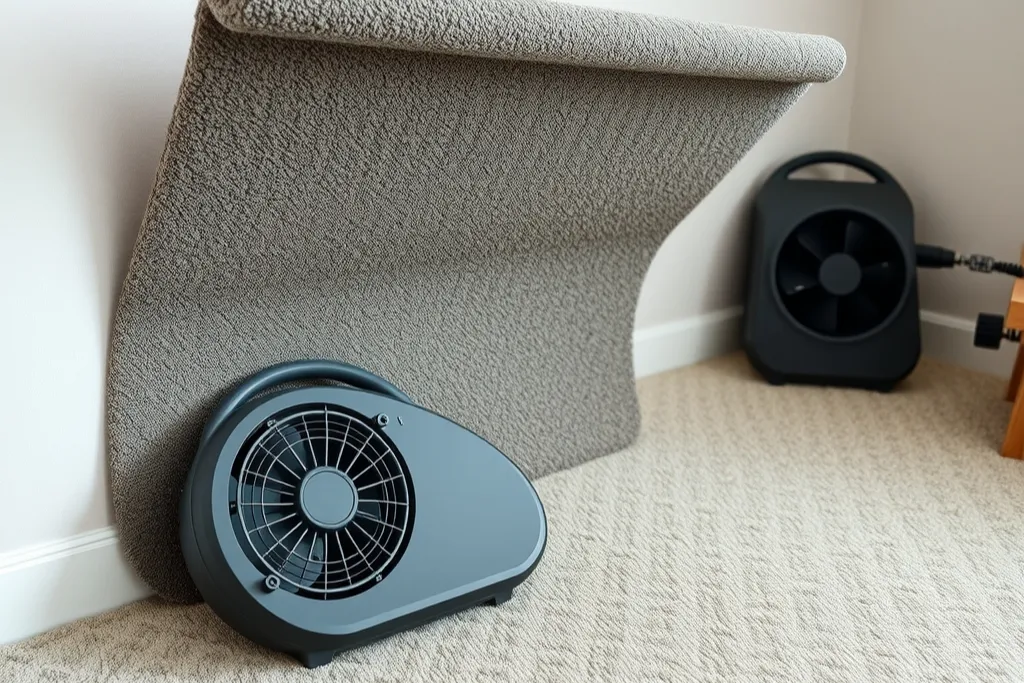
Do not remove equipment, unplug a dehumidifier or turn off a fan to save on power while readings are still above the reference. Keep extension cords out of wet areas, and keep children and pets away from running equipment.
Meters measure wet materials and also an unaffected wall or floor in your home. That unaffected reading is the target, because drywall and wood settle at different levels in different houses.
The crew sizes dehumidifiers to the volume of air and places air movers to push dry air across wet surfaces. Ceilings, wall cavities and cabinet bases get directed airflow where needed.
Baseboards may come off, and small holes may be drilled in a wall cavity so dry air can enter. Wet insulation and swollen board that cannot dry are removed with your okay.
Readings are logged at each visit and compared to the reference. Equipment is moved or removed as areas dry, so you are not billed for fans in a dry room.
When every wet area matches the reference, the crew removes the equipment and gives you the log. Repairs start only after that point.
Drywall dries faster than most materials, but insulation in a cavity can hold water long after the surface looks dry. Directed airflow through small openings often saves walls that would otherwise be cut out.
Concrete takes longer to give up water than wood or drywall, and floating plank or pad over a slab can trap it. The crew lifts what traps moisture and uses dehumidifiers to pull the rest out of the slab surface.
Cabinet bases and trim are dense or layered, so they dry slowly. Attic insulation can be removed rather than dried, and the framing beneath it is then dried and checked. Water that reached ceilings is covered on the ceiling water damage page.
Drying is billed by the equipment on site and the days it runs, plus the monitoring visits. The rates here are typical day rates that restoration companies use for the same kind of gear.
| Job | Typical range | What it includes |
|---|---|---|
| Structural drying for one room (3–5 days, equipment and monitoring) | $800–$2,500 | Includes readings on each visit |
| Air mover (per unit, per day) | $25–$50 | A single wet room often uses several |
| Commercial dehumidifier (per unit, per day) | $65–$150 | Size depends on room volume and how wet the air is |
| Flood cut: remove wet drywall 2–4 ft up (per linear ft of wall) | $3–$8 | Used when a cavity cannot dry from the open side |
| Moderate job (several rooms, soaked carpet and walls) | $1,500–$3,500 | Whole-job figure, with extraction and drying |
Numbers like these are what a technician might say before seeing the job, and the firm figure comes on site. The emergency-stage price is approved before work starts.
A crew is dispatched as fast as one is available, and you approve the estimate before any work starts.
Many Lewisville houses are sealed, air-conditioned slab-on-grade builds with attic equipment, so a wet floor, a soaked ceiling and a damp cabinet can all happen in one event. Each material dries at its own pace, which is why a single fan in the corner rarely finishes the job. The crew places equipment by the readings, room by room.
Summers here are hot and humid, and the indoor air in a house that has had water in it can stay heavy for days. A dehumidifier works hardest in those months, and the air conditioning has to keep running to help it. In a cold snap the crew keeps the house warm too, since cold materials give up water slowly.
Lewisville is in Denton County, where lake-area and creek-side properties can also take in surface water in heavy storms. That water is contaminated, which changes what can be dried and what has to come out. The same dry reference applies afterward, and a house that took in storm water often needs more removal before drying can begin.
Two-storey houses add a wrinkle. Water from an attic leak or an upstairs bath dries differently on each level, so the crew often runs separate equipment upstairs and down and reads each floor on its own. A single drying plan for the whole house would miss the slab on the ground floor or the ceiling cavity above it.
Water removal, drying to a documented goal and repair quotes for Lewisville and Lewisville Lake area homes, with phones answered 24/7.
Pumping and extraction after burst pipes, attic heaters and storm water in Lewisville, with phones answered 24/7.
Drying and cleanup of stained, bulging or sagging ceilings fed by attic equipment, upstairs plumbing or a leaking roof above.
What Texas requires for mold removal in Lewisville: a licensed remediator at 25 square feet or more, working to a separate assessor's plan.
Not sure if you're covered? Check your ZIP code.
Published cost guides put a typical water damage restoration job between about $1,400 and $6,400 nationally, with a Dallas-Fort Worth range of roughly $1,200 to $5,000 reported by regional restoration companies.
In Texas, mold remediation on 25 contiguous square feet or more of surface requires a license from the Texas Department of Licensing and Regulation, and the same license holder may not both assess and remove mold on one project.
A slab leak is a break in a pipe that runs under or inside a concrete slab.
Air movers and dehumidifiers run all day to keep air moving across wet materials. The noise is a side effect of doing the job quickly, and the crew removes units from rooms as soon as they dry.
Yes, because the equipment runs continuously for several days. How much depends on the number of units and the length of the job. Keep the bill, since it may belong in your claim file.
Usually you can walk through, though furniture is moved to make room for the equipment. Keep children and pets out of the area and do not move the air movers yourself.
The crew investigates why. Common causes are water still entering from a leak, a material that cannot dry in place and has to be removed, or air that is not being dehumidified well enough.
Wet insulation is usually removed rather than dried, since it holds water against framing and ceilings. The framing underneath is then dried and checked with a meter before new insulation goes in.
It lowers the risk by taking away the moisture mold needs. It cannot undo growth that is already present, and it does not replace a professional assessment if you see or smell mold.