Phones answered 24/7Lewisville, TX 75067
Call (833) 490-5225
Phones answered 24/7Call any time(833) 490-5225
Urgent? Phones answered 24/7

Flood Damage Cleanup near Lewisville Lake and the Elm Fork

Cleanup after lake, creek or storm-drain water enters a Lewisville area home, handled as contaminated Category 3 water.

  • Phones answered 24/7, freeze nights included
  • Attic water heaters, burst pipes, lake and creek water
  • Emergency-stage price approved before work starts
  • Daily moisture logs and photographs, yours to keep

Get a fast quote

Fastest: call (833) 490-5225. Or send this and we call you back.

Flood Cleanup

Flood Damage Cleanup: what it covers

Quick answer

Flood damage cleanup removes lake, creek and storm-drain water from a home and treats everything it touched as contaminated, or Category 3. Soaked drywall, pad and insulation usually come out rather than dry in place. Flood is a separate insurance question from a burst pipe. Phones are picked up at any hour, and the next free crew goes out.

Flood Damage Cleanup illustration for Lewisville, TX, with a red barn and a lake in the background

Floodwater is not rainwater that came inside. It has crossed yards, streets and storm drains, and it carries soil, bacteria and whatever else it picked up on the way. Stay out of it, keep children and pets away, and do not turn on anything electrical that stood in it.

Lewisville sits on the south shore of Lewisville Lake, a U.S. Army Corps of Engineers reservoir on the Elm Fork of the Trinity River in Denton County. Below the dam the Elm Fork runs toward Carrollton and Dallas, Denton Creek feeds the system, and storm drains in between can fill faster than they empty. Each of those is a way for water to reach a house.

Flood cleanup differs from pipe cleanup in what happens to materials. Porous items that took in contaminated water, such as carpet, pad, insulation and drywall, are generally removed rather than dried, and hard surfaces are cleaned and treated before drying starts.

Service area
Lewisville & Denton County
Availability
Phones answered 24/7, emergencies first
Typical cost
$7–$10 (estimate)

What happened when Lewisville Lake hit a record in 2015?

Early on Sunday 31 May 2015 Lewisville Lake reached a pool of record of 537.02 feet, well above its 522-foot conservation pool and the 532-foot spillway top. Water topped the spillway and flooded streets below the dam, but reports said it did not enter structures there.

The episode helped win roughly $150 million of Corps upgrades at the dam, about half of it for the spillway. Those are dam safety improvements, and they do not mean the dam was unsafe. They reflect how close the lake came to testing its design.

No source we have names a town where homes took lake water that day, and this page does not claim one did. What the record does show is how much water the system can hold, and how much room for rain it leaves.

Why is floodwater treated as contaminated?

Floodwater from a lake, creek or street is Category 3, the most contaminated class, because it carries sewage, soil, chemicals and bacteria from everywhere it crossed. Materials it soaks are usually removed rather than dried, and cleaning and treatment come before drying so contaminants do not stay in the structure.

Category 3 is an industry term from the ANSI/IICRC S500 standard, and it is not a judgment about your house. It also describes rising floodwater, not only sewage. Clean water can slide toward Category 3 if it sits, but floodwater starts there.

That is why the early photographs and the removal list matter. The crew records what came out and where the waterline sat, which gives your insurer and any later buyer a clear picture.

Does homeowners insurance cover flood damage?

Standard homeowners policies usually exclude flood, meaning surface water from lakes, creeks and overflowing drains. Flood coverage is a separate policy, through FEMA's National Flood Insurance Program or a private insurer, and it generally has a waiting period. Your insurer decides coverage under your policy, and the crew only documents.

Ask your agent now, not after a storm, whether you have flood coverage, and what the waiting period is for a new policy. Many homeowners learn the difference only after water has come in.

If you do have flood coverage, photograph the waterline, keep damaged items until the adjuster has seen them and call early. The crew passes along its readings, photos and the record of what was removed for the claim.

What should you do in the first hours after flooding?

Stay out of the water, shut off power at the panel only if you can reach it dry, photograph everything and call. Do not run a household vacuum, do not eat food that touched floodwater and do not wait for the water to recede before reporting it. Cleanup starts once the structure is safe to enter.

If the water is still rising or standing in the street, wait for it to recede before you try to enter. Floodwater near the Elm Fork or a creek can move quickly and can hide holes or debris.

Move valuables upward, not outside. Wet cardboard, upholstered furniture and rugs often cannot be cleaned, and your list of what you lost helps with an insurance claim.

Which materials stay and which go after a flood?

Sealed hard surfaces such as tile, concrete and framing are cleaned, treated and dried. Porous materials that soaked up floodwater, including carpet, pad, insulation, drywall and particleboard cabinet bases, are usually removed. Solid wood sometimes stays after cleaning, and the call depends on readings and how long it sat wet.

People often ask the crew to save the carpet, and the answer depends on the water, not the carpet. Clean-water carpet can sometimes be dried and re-stretched. Carpet that sat in floodwater carries contamination into its backing and pad, and cleaning does not reliably remove it.

Furniture and contents get sorted too, into items to clean, items to store and items to discard. The crew photographs each group first, and the list becomes part of the record you keep for your claim. Nothing is thrown away without you seeing it first.

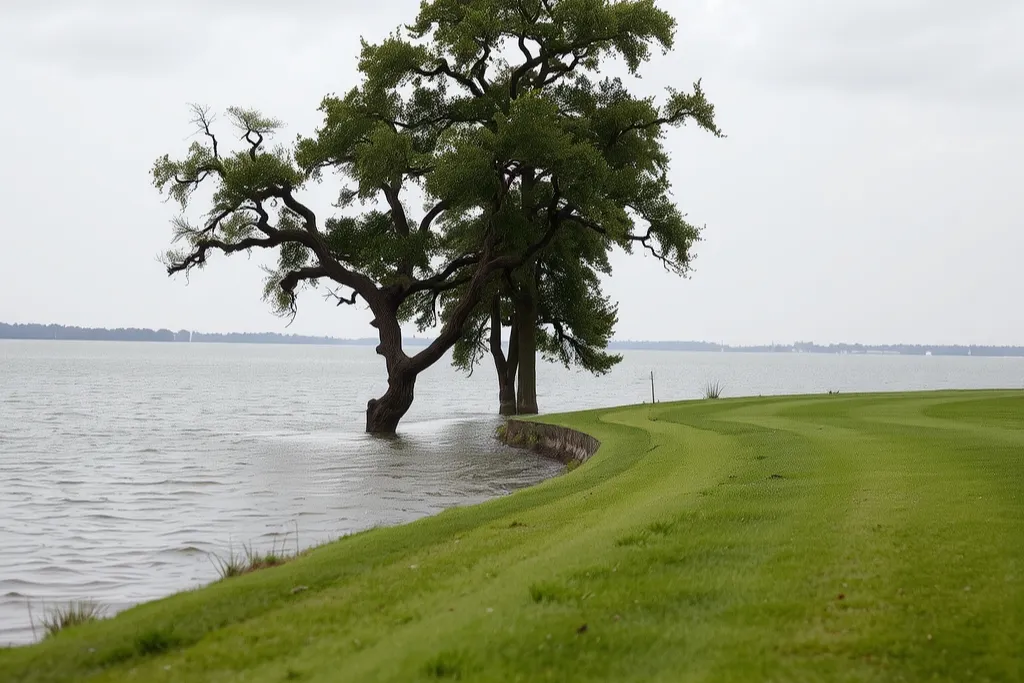
Floodwater standing over a lawn with post oaks rising out of the water.
When a lake or creek comes up, the water is treated as contaminated from the first minute.Each image on this site was generated to illustrate lake-area homes and drying work, and none of them is a photograph of a loss this company restored.
Warning signs

Signs you need flood damage cleanup

Never wade through floodwater near downed lines, and never run a generator, vacuum or space heater in a room that stood in it. Keep children and pets out, and wash hands and skin that touched the water.

  • Water entering at a garage door, a patio threshold or a walk-out entry after heavy rain
  • A brown or gray tide line on walls, cabinets or garage contents
  • A sewer-like or earthy smell that clings to carpet and drywall
  • Silt or a film of mud on the slab after the water drops
  • Street or yard flooding that stops at the foundation but seeps through the slab edge
  • Storm drains that back up into a yard or driveway during a storm
  • Swelling cabinet bases, lifting baseboards and soft drywall at floor level
  • A flooded low crossing or creek bank near the property, with water still rising
Our process

How our flood damage cleanup visit works

  1. Assess safety before anyone enters

    The crew checks for electrical hazards, structural issues and contaminated water. Protective gear is used, and anything that stood in floodwater is treated as contaminated.

  2. Pump and extract the water

    Pumps clear deep water, and extractors remove what is left from floors. Photographs and a waterline are recorded before furniture or contents move.

  3. Remove materials that cannot be cleaned

    Carpet, pad, insulation and wet drywall are removed, with a flood cut made above the waterline where readings call for it. Items are listed so you have a record.

  4. Clean and treat hard surfaces

    Slab, framing and other hard surfaces are cleaned and treated before drying equipment goes in. Skipping this step leaves contaminants behind the new finishes.

  5. Dry, verify and hand over the file

    Air movers and dehumidifiers run until readings match the dry reference. The photographs, readings and an itemized removal record go to you for your claim.

Options

Types and options for flood damage cleanup

Lake-adjacent flooding

Lewisville Lake is a Corps reservoir, and when it rises, water can reach low lots near the shoreline. The Lake Cities of Lake Dallas, Hickory Creek, Shady Shores and Corinth sit along that shore, as do The Colony and Highland Village.

Creek and Elm Fork overflow

Heavy rain can push Denton Creek and the Elm Fork out of their banks. The Elm Fork, unlike the main Trinity, has limited capacity in big rains, according to local reporting, so low crossings and nearby yards can flood.

Storm-drain and runoff flooding

Rain that outruns storm drains pools at garage doors, low yards and walk-out entries and then pushes under thresholds. It is Category 3 as soon as it has crossed a yard or a street.

Job stories

Typical jobs for flood damage cleanup

Typical job
Illustration: Runoff from a swollen creek channel enters the garage of a Hickory Creek lot

Runoff from a swollen creek channel enters the garage of a Hickory Creek lot

What homeowners notice
After days of heavy rain, runoff from a creek channel behind a low lot near the lake spills over the yard and under the garage door of a Hickory Creek house. Water reaches the garage and the edge of the adjoining den, carrying silt with it.
What we do
Because the water came from outside, the crew treats it as Category 3 from the start. It extracts the water, removes the carpet and pad at the den edge, cuts the wet drywall above the baseboard and cleans and disinfects the affected surfaces before setting air movers and LGR dehumidifiers.
What to expect
The den dries over several days of readings, and the homeowner is told that surface water is generally a flood loss, so a standard policy may not respond and flood coverage is a separate question for the insurer.

4–6 hours typical visit

Cost

How much does flood damage cleanup cost in Lewisville?

Flood jobs price higher per square foot than clean-water leaks because of the removal, cleaning and treatment steps. How much of the house was reached matters more than how deep the water got.

Flood Damage Cleanup pricing in Denton County (2026)
JobTypical rangeWhat it includes
Category 3 (black water) mitigation, per sq ft$7–$10Includes removal and cleaning of affected surfaces
Severe job (structural damage, extensive intrusion)$3,500–$7,000+Whole-floor flooding or long-standing water
Flood cut: remove wet drywall 2–4 ft up (per linear ft of wall)$3–$8Cut above the waterline where readings show wicking
Antimicrobial application (per sq ft)$0.50–$2.00Applied to hard surfaces after cleaning
Contents pack-out, cleaning and storage$1,000–$6,000+Only for items that can be cleaned and kept

A flood job is one where an on-site look matters most, so read this table as an opening estimate for Denton County in 2026 and nothing firmer. You approve the emergency-stage price before work begins, and rebuilding is quoted after drying.

Still stuck? We pick up 24/7.

If it's an emergency, call now. For non-urgent flood damage cleanup, send the form and we'll call you back.

Denton County

Why flood damage cleanup is different in Denton County

Lewisville Lake covers 29,592 surface acres, and the Corps built the Garza-Little Elm Dam between 1948 and 1954 for $23.4 million. The 32,888-foot Lewisville Dam was completed in 1955. The old Garza Dam was breached in 1957 to create the lake, and the city of Lake Dallas takes its name from the lake's original name.

The Colony has about 23 miles of shoreline including two peninsulas, and the four Lake Cities of Lake Dallas, Hickory Creek, Shady Shores and Corinth are shoreline towns too. Low lots near the water are where lake level and local drainage problems show up first. Lewisville itself is on the south side, with storm drains and creeks feeding the lake.

Below the dam the Elm Fork runs toward Carrollton, Farmers Branch and Dallas. A house well away from the water can still take in runoff at a garage door, so distance from the lake is not the same as safety from flooding. See also storm damage restoration for wind, hail and roof-related water.

Related

Storm Damage Restoration

Emergency tarping, board-up and interior water removal after hail, wind and heavy rain in Lewisville and the Lewisville Lake area.

Sewage Cleanup

Protective removal, cleaning and drying after a sewer or drain backup in Lewisville, handled as Category 3 water.

Emergency Water Removal

Pumping and extraction after burst pipes, attic heaters and storm water in Lewisville, with phones answered 24/7.

Mold Inspection

How a Texas mold assessment works in Lewisville: a separate licensed assessor inspects and writes the plan before any removal.

Guides

Read before you book

FAQ

Flood Damage Cleanup FAQs

Can floodwater be dried instead of removed?

Hard, sealed surfaces can be cleaned, treated and dried. Porous materials such as carpet, pad, insulation and drywall that soaked up floodwater are usually removed, because the contamination goes into them.

How long before mold can start?

Mold needs moisture and time, and a flooded house has both. Removing wet materials and drying to a documented goal quickly limits it. If growth appears anyway, the mold inspection page explains the Texas process.

Will I need a flood policy?

A flood from a lake, creek or overflowing drain is generally excluded from standard homeowners coverage. A flood policy is separate, and you should ask your agent about it and its waiting period before the next storm.

Is the water from the lake dangerous?

Floodwater is treated as contaminated no matter where it came from. Avoid skin contact, and do not rely on its color or smell to judge it. The crew uses protective gear, and you can wait outside.

Do you work with homes near the lake in Highland Village or the Lake Cities?

Yes, Lewisville Water Damage Restoration dispatches across Denton County, including the shoreline communities. The Lake Dallas page describes what sets that side of the lake apart.

Does the crew take on commercial flooding?

Yes, though larger commercial jobs are quoted after a walkthrough. The first step is the same: stop the source, remove the water and record the readings.

Find Lewisville Water Damage Restoration on